This is why the plan exists
Bitcoin is down 30%. The no-plan scenario is worse.

Gigantes.
Investment strategies shine when things go south, when you need to defend. Making money in a bull market is not hard. But unless you’re a perma bear, tenacity is tested on the way down.
In Buffett’s words: It’s only when the tide goes out do you discover who’s been swimming naked.
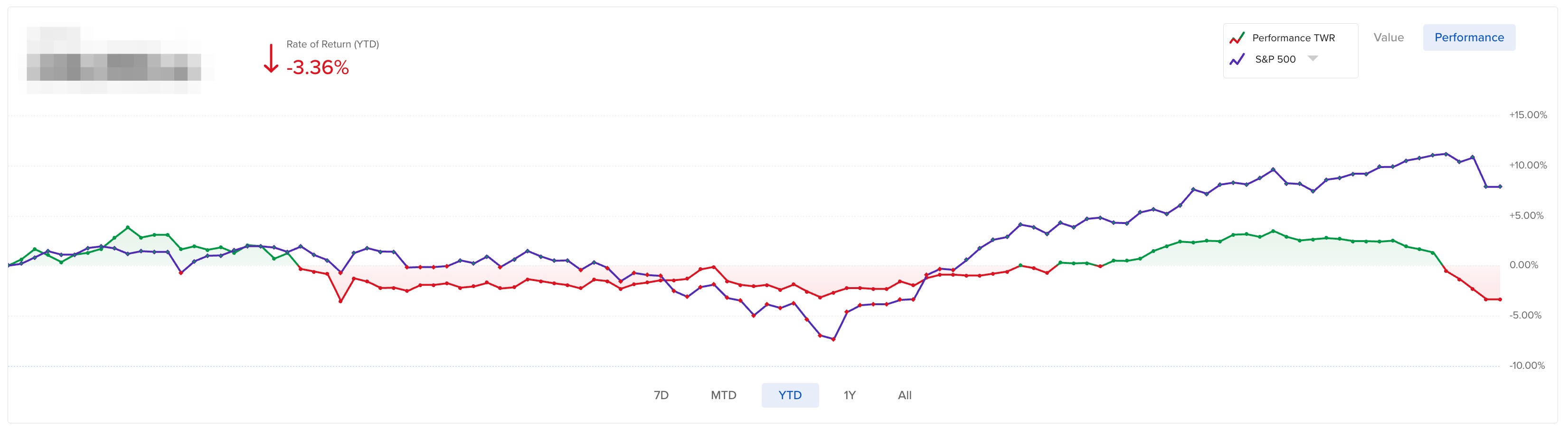
As you may know, Bitcoin is down ~30% so far this year. Being one of the three Core positions in the portfolio I share with you all, the impact is noticeable.
Currently, I’m -3.36%, lagging the S&P 500 which is up almost 8%.
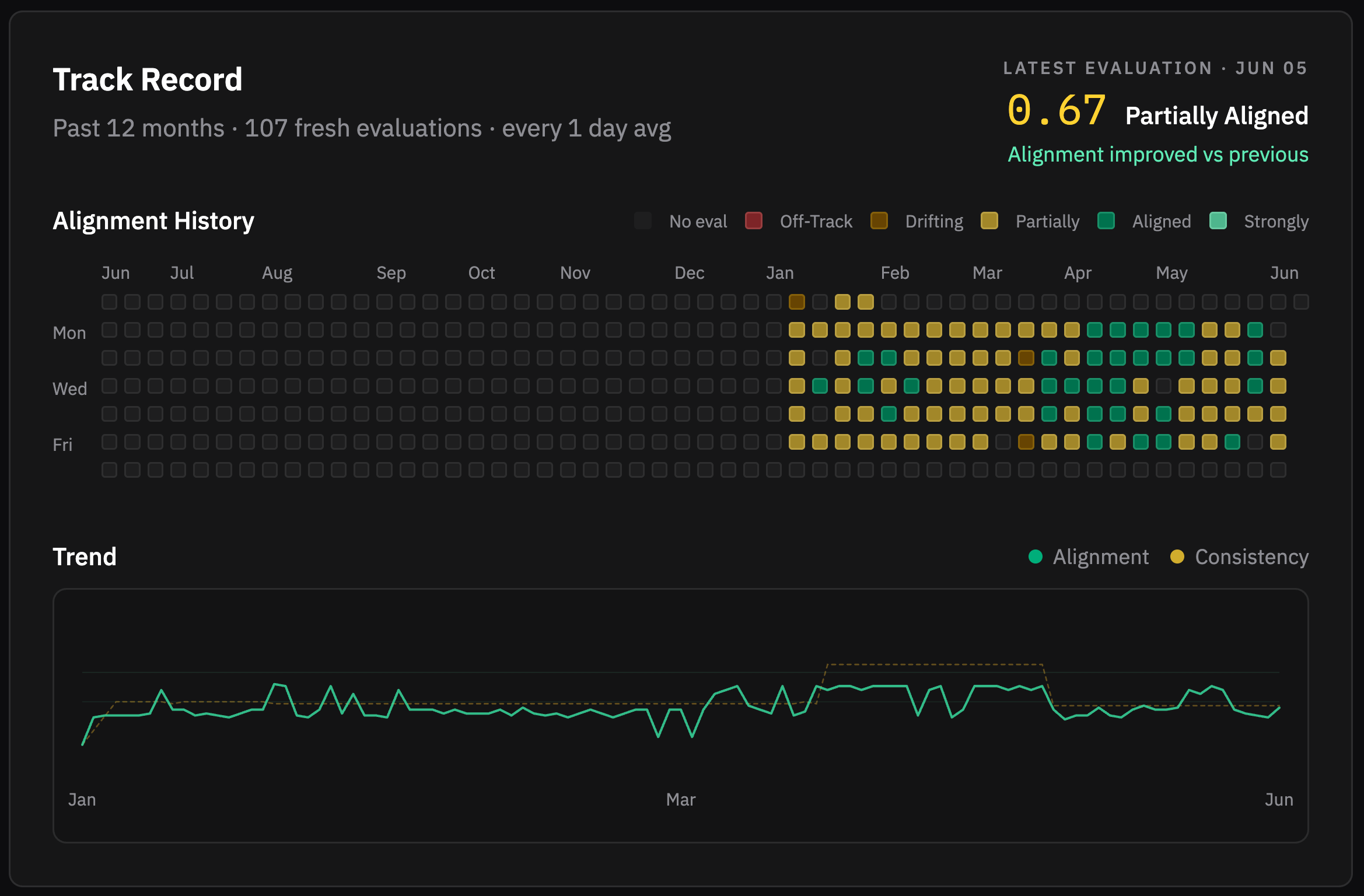
During this time I have been consistently executing my strategy, which, in the case of Bitcoin, uses “IBIT as a volatility engine where premium is captured via short options, acting as a poor man’s market maker with a long-term bullish bias.”
Quick clarification before we continue: not for a second do I confuse IBIT it with the real thing. But being a Fundamentalist-Capitalist, I use it in this portfolio to speculate in the market, because I see the game for what it is, but also own the exit.
The plan describes how to respond during this type of market. In short, it relies on incremental deployment of short calls up to a fixed threshold, based on my technical bias. My technical read is a living input for the plan.
Remember I started this entry mentioning the importance of investment strategies when there’s selling pressure. Well, that’s exactly what I wanted to measure and register here.
What would my performance look like without the execution of my plan?
The no-plan scenario

I asked the bots to help me arrive at the number. Here is the logic:
Remove all realized gains and losses from IBIT activity.
Rebuild the Bitcoin position as a simple IBIT holding. No options.
Keep the same buys and sells.
Price that IBIT position today.
Compare it against the actual portfolio.
The answer is: I’d be down almost 10%. The premium collected has absorbed roughly 6% of portfolio-level damage. Break-down in the internal chat.
For me, this is huge. Not only because of the performance, although that’s the most tangible metric. But there are others too: the endurance you build navigating the market this way.
I’m not a sailor, but this is the closest analogy I have: this must be what keeping a boat afloat feels like. You don’t control the weather. You read it, run the plan and adjust.
Now, I’m not sharing this to brag, or because I want you to think: “Pember is selling his strategy.”
That’s not the point. The strategy works for me because I have the context, the risk tolerance, and the conviction to execute it. That part is personal. You need to build your own conviction.
I’m sharing it because I think it is vital to define your strategy. It doesn’t matter if your plan is simpler. Quite the opposite. The simpler, the better. But it needs to be written down.
The tool already exists, and it’s helping me. kovatools.com is what I use to manage my portfolios. If you have questions about Kova, or are thinking through how to define your own strategy, reach out.
This is it for today.
Juan